Navigation Menu

When 7-11 Just Wasn’t Enough

Source - asia.nikkei.com
News broke last week that 7-Eleven is closing in Indonesia. Then, the doors shut, premises were vacated, staff were out of jobs. Not that it will affect consumers much though – there are plenty of competing brands, both Indonesian and international that will pick up any slack. But what caused a global brand to shut down over 100 outlets in a supposedly thriving economy?

The following article from Nikkei Asian Review analyses the factors that impacted upon the 7-Eleven [success] story in Indonesia in recent years.

* * * * *
Parking attendants linger in front of a recently closed 7-Eleven in South Tangerang in suburban Jakarta. (Photo by Ardi Wirdana)
JAKARTA -- 7-Eleven convenience stores looked like a success in Indonesia when they began popping up in 2009. The stores stayed busy and local operator Modern Internasional made plans to expand the chain's reach outward from Jakarta.

But come Friday, 7-Eleven's famous 24-hour operations will go to zero: Modern is closing its remaining 130 or so outlets after a 1 trillion rupiah ($75 million) deal to sell the chain to conglomerate Charoen Pokphand came undone in early June, just six weeks after it was first announced. Charoen Pokphand's CP All unit runs Thailand's 7-Eleven network, the world's second-largest after that of Japan, but it will not be adding Indonesia to its empire after all.

The sudden turn of events is no big surprise for Arifin, a parking attendant at a 7-Eleven on the outskirts of Jakarta: "The stores were always crowded, but the customers never bought much. They came to hang out and to enjoy the Wi-Fi. They would bring their laptops and stay for hours but only buy a single drink."

Ultimately, that was not enough for Modern, especially in the face of fierce competition on one side from Alfamart and Indomaret, locals chains each with a longer history and bigger network in the country, and on the other from street food stalls with faster customer turnover.

"The income from [7-Eleven] sales does not cover operational costs like electricity, lights, Wi-Fi and overhead," said Reza Priyambada, a retail analyst at Bina Artha Securities in Jakarta.

Both Alfamart and Indomaret had initially reacted to 7-Eleven's early outward success with imitation. The two had long operated as minimarkets, a format in Indonesia with a greater emphasis on fresh groceries than convenience stores and less stress on serving food or selling alcohol.

In an echo of Modern's franchise from Japan's Seven & I Holdings, Alfamart made a deal with Japan's Lawson convenience store chain while Indomaret created a convenience store sub-brand called Indomaret Point. Japanese convenience store chains FamilyMart and Ministop also signed up eager local franchisees.

Modern itself had originally prospered as the operator of Indonesia's Fujifilm photo printing network. It turned to 7-Eleven with retail photo developing in steep decline, converting some locations to the new business.

For young Indonesians, 7-Elevens offered a hip recreational space. Their street-side locations and affordable hot meals give them the feel of a traditional eatery while comfortable seating areas, air-conditioning and free Wi-Fi resembled the facilities of a modern cafe. About half the average store's space was dedicated to providing fresh food and drink.

Revenues reached a peak in 2014 of 971.77 billion rupiah as the store network count hit a high of 190.

Out of beer

The good times were not to last. In April 2015, the government banned alcohol sales in convenience stores and minimarkets. At the time, alcohol accounted for about 15% of 7-Eleven's revenues.

Although the national government relaxed the policy five months later, allowing local authorities to decide on implementation, Jakarta, among other big cities, kept the sale restrictions in place.

Meanwhile, 7-Eleven might have been constrained in reorienting its focus by permitting issues, according to Tutum Rahanta, deputy chairman of the Indonesian Retailers Association. The trade department in 2012 issued a warning letter to 7-Eleven for selling retail goods without appropriate business permits, according to local media reports at the time.

Amid the alcohol ban, 7-Eleven's sales for 2015 dipped 8.8% to 886.84 billion rupiah and Modern itself dropped into the red with a net loss of 54.76 billion rupiah.

Alfamart and Indomaret both shrugged off the alcohol ban and posted revenue gains that year. The two, which each operate more than 13,000 stores, have been selling groceries and snacks in the country for more than two decades.

They have been increasingly leveraging their broad reach to offer other services, including bill payment and travel bookings. Nomura, the investment bank, estimated in a report last month that such services accounted for a 15.3% share of Alfamart's earnings before income and tax last year, up from just 1.1% four years before.

Modern began closing 7-Eleven last year amid the sales slump, shuttering 21 outlets in 2016. Chain revenues slipped a further 23.9% to 675.28 billion rupiah. Modern fell into the red on an operating level, with an operating loss of 764.32 billion rupiah. Early this year, Modern closed about 30 more 7-Elevens.

Ministop's franchisee, which had aimed to open 300 outlets, gave up with less than 10 in operation. Hero Supermarket, a retail group controlled by Hong Kong's Jardine Matheson Holdings, sold its struggling Starmart convenience store chain to Wings Group, holder of the FamilyMart franchise. Some of the former Starmarts have been converted to FamilyMarts, but that chain's web site lists only 59 outlets versus the 300 it originally targeted to operate by 2015.

Both Alfamart and Indomaret meanwhile saw revenues continue to grow last year, with profits rising too. Both though are also having second thoughts about the suitability of the convenience store format and are instead planning to open more than 1,200 minimarkets this year.

Alfamart has closed a number of Lawson outlets. Finance Director Tomin Widian told Nikkei Asian Review: "We will not be adding any more Lawson stores as yet. We are currently still reviewing its business model."

Modern officials could not be reached for comment. The company's shares, which peaked four years ago at 1,050 rupiah, now trade for 50 rupiah. Without 7-Eleven, the company will be left with a small imaging business, the vestige of its old Fujifilm chain. At 228.7 billion rupiah, Modern's market capitalization is barely a quarter of what Charoen Pokphand was to pay for the 7-Eleven stores.

Links to articles:
http://asia.nikkei.com/Business/Companies/Why-7-Eleven-is-closing-in-Indonesia?page=1
http://asia.nikkei.com/Business/Companies/Why-7-Eleven-is-closing-in-Indonesia?page=2

Quote of the Week


Quote of the Week


How Our Brains Decide on Brands

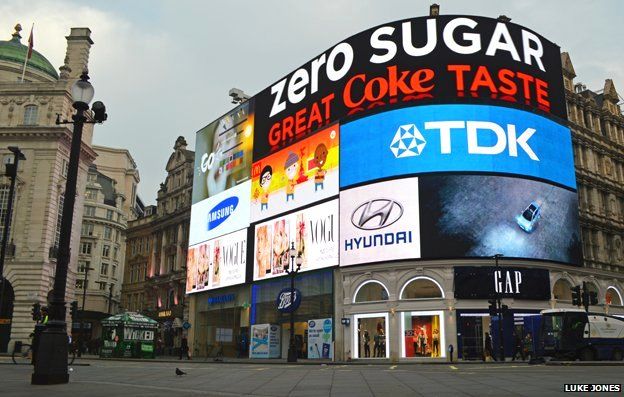
Source - Luke Jones | BBC.com
Recent research from Australia and New Zealand has re-examined and re-understood how consumers choose brands. From the minds of Justin Mowday and Rupert Price from DDB New Zealand, check out some of the new rules on how to grow business below, or visit NZ Herald here for the article.

* * * * *

The supermarket chiller offers 174 varieties of bacon. How does a shopper choose which one to buy?

New research shows many marketing beliefs about how consumers decide between brands are wrong - and have been for decades, according to DDB New Zealand chief executive officer Justin Mowday and chief strategy officer Rupert Price.

Price says, in 40-year-old thinking, there have been three golden rules to grow business: 1. Win your category. 2. Win the mind of your consumer and 3. Win today.

Based on the research of academics, including New Zealander Byron Sharp, Professor of Marketing Science at the University of South Australia, DDB has come up with three new rules, described as "unreasonable thinking" - because that's how modern science shows people make decisions.

Price says research shows that rather than making reasonable, logical choices, consumers are driven by more deeply rooted and unchanging emotions. Consequently, many notions marketers have long held to be true are unfounded and contrary to how consumers behave.

"As the data shows, the old 80:20 rule - that 80 percent of your sales come from 20 per cent of your customers - is just not true," says Mowday. "The idea that the Unique Selling Proposition gives you an advantage, finding a unique space in your market that differentiates you from your competitor, is just not true."

Even for rock-star brands like Apple, the research shows people are as likely to buy from a different manufacturer each time they choose a product, challenging the long-held perception that consumers stick with preferred brands.

So the first new rule is: Culture dwarfs category, defined as making a brand distinctive and making it stand for something bigger than its products.

Price explains: "Make your brand more famous than the others. The first way is getting into conversations more often and being more obvious - a good example is the Westpac chopper.

"How many times does it get mentioned on the 6 o'clock news? Those things build memories and the more top-of-mind a brand is, the more likely you are to choose it.

"But it's not just fame. In addition, it's building a point of view on the world. Consumers are more attracted to brands that have a point of view bigger than just the product or service they provide."

Mowday says while there have been missteps, "brands that don't take a stance are at risk of being tarnished with a negative point of view. One side of a debate will say, 'That brand hasn't taken a stand for us, we are therefore against it,' and with social media, within a day you're in the news for all the wrong reasons."

New rule 2: Feelings conquer thinking: "We are an irrational species, and so our emotive brain controls 95 per cent of what we do. Most of the choices we make are subconscious," Price explains. "When you choose from your 174 varieties of bacon in the supermarket, you don't weigh up the benefits and attributes of each one. We have short-cuts that allow our brain to say, 'I just like that brand' or whatever.

"Those are down to likes and preferences and those are shaped by memory. Memory is shaped by emotion, so if you can create an emotional connection, it's a far more powerful and compelling way to draw people towards your product or brand.

"Emotions drive all the decisions we make and our subconscious brain is shaped by our emotions. Most of the brand choices we make are based on intuitive gut feeling."

Mowday: "If we look at one ad break, a whole heap of the content is based on rational reasons why I should buy something - yet we know from science 95 per cent of our decisions are made by emotion. This is where the advertising and marketing industry hasn't caught up with science."

Rule 3: Long-term beats short-term. "We live in the tyranny of short-termism," Price says. "Organisations like Unilever no longer report quarterly because they believe it's forcing them to make short-term decisions not necessarily in the best interests of growing their businesses.

"What a lot of evidence is showing us now is that if you can invest in brand-building long-term, you won't necessarily see a lift in your sales short-term, but if you can stick it out for 12 months, 24 months, 36 months, then you'll see a phenomenal payback.

"That's because (a) these things take time to build (b) it's those long-term emotional associations that dictate brand behaviour over time rather than short-term deals designed to entice people to buy things immediately."

Mowday advocates a balance, citing Specsavers, which has been using "Should have gone to Specsavers" to build its brand for 33 years and running offers like "Get two pairs from $199".

"McDonald's, a client of ours, is a perfect example with their 'I'm Loving' It' slogan and jingle."

Price says empirical evidence supports a split of 60 per cent long-term brand-building against 40 per cent short-term sales tactics.

"In the modern world, every product and service gets copied within minutes or maybe months. You don't have a competitive advantage for years. Brand is therefore even more important.

"We know these rules provide a simple, measurable and actionable approach to drive exponential business growth."

Spotting Fake News

Source – mediaite.com
Fake news has the potential to kill brands. It’s everyone’s job to stop that from happening!

Fake news, or, ahem, ‘alternative facts’ has been hitting the headlines increasingly so in the past few months. But, it’s certainly not a new problem. What is new is both the volume and the speed in which fake news spreads, and in the number of people who don’t analyse basic stories critically enough to ascertain whether they are genuine or not.

The following advice from Fact Check offers some useful perspective on how to spot fake news, and how to decipher it from the plethora of real news that is out there. Frankly speaking, every little thing we do to help stop the spread of fake news is a good move. It’s up to us all. For the whole article, click here.

* * * * *

Consider the source.
In recent months, we’ve fact-checked fake news from abcnews.com.co (not the actual URL for ABC News), WTOE 5 News (whose “about” page says it’s “a fantasy news website”), and the Boston Tribune (whose “contact us” page lists only a gmail address). Earlier this year, we debunked the claim that the Obamas were buying a vacation home in Dubai, a made-up missive that came from WhatDoesItMean.com, which describes itself as “One Of The Top Ranked Websites In The World for New World Order, Conspiracy Theories and Alternative News” and further says on its site that most of what it publishes is fiction.

Read beyond the headline.
If a provocative headline drew your attention, read a little further before you decide to pass along the shocking information. Even in legitimate news stories, the headline doesn’t always tell the whole story. But fake news, particularly efforts to be satirical, can include several revealing signs in the text. That abcnews.com.co story that we checked, headlined “Obama Signs Executive Order Banning The Pledge Of Allegiance In Schools Nationwide,” went on to quote “Fappy the Anti-Masturbation Dolphin.” We have to assume that the many readers who asked us whether this viral rumor was true hadn’t read the full story.

Source – Fullerton College Library

Check the author.
Another tell-tale sign of a fake story is often the byline. The pledge of allegiance story on abcnews.com.co was supposedly written by “Jimmy Rustling.” Who is he? Well, his author page claims he is a “doctor” who won “fourteen Peabody awards and a handful of Pulitzer Prizes.” Pretty impressive, if true. But it’s not. No one by the name of “Rustling” has won a Pulitzer or Peabody award. The photo accompanying Rustling’s bio is also displayed on another bogus story on a different site, but this time under the byline “Darius Rubics.” The Dubai story was written by “Sorcha Faal, and as reported to her Western Subscribers.” The Pope Francis story has no byline at all.

What’s the support?
Many times these bogus stories will cite official — or official-sounding — sources, but once you look into it, the source doesn’t back up the claim. For instance, the Boston Tribune site wrongly claimed that President Obama’s mother-in-law was going to get a lifetime government pension for having babysat her granddaughters in the White House, citing “the Civil Service Retirement Act” and providing a link. But the link to a government benefits website doesn’t support the claim at all.

Check the date.
Some false stories aren’t completely fake, but rather distortions of real events. These mendacious claims can take a legitimate news story and twist what it says — or even claim that something that happened long ago is related to current events.

Is this some kind of joke?
Remember, there is such thing as satire. Normally, it’s clearly labeled as such, and sometimes it’s even funny. Andy Borowitz has been writing a satirical news column, the Borowitz Report, since 2001, and it has appeared in the New Yorker since 2012. But not everyone gets the jokes. We’ve fielded several questions on whether Borowitz’s work is true.

Among the headlines our readers have flagged: “Putin Appears with Trump in Flurry of Swing-State Rallies” and “Trump Threatens to Skip Remaining Debates If Hillary Is There.” When we told readers these were satirical columns, some indicated that they suspected the details were far-fetched but wanted to be sure.

Check your biases.
We know this is difficult. Confirmation bias leads people to put more stock in information that confirms their beliefs and discount information that doesn’t. But the next time you’re automatically appalled at some Facebook post concerning, say, a politician you oppose, take a moment to check it out.

Try this simple test: What other stories have been posted to the “news” website that is the source of the story that just popped up in your Facebook feed? You may be predisposed to believe that Obama bought a house in Dubai, but how about a story on the same site that carries this headline: “Antarctica ‘Guardians’ Retaliate Against America With Massive New Zealand Earthquake.” That, too, was written by the prolific “Sorcha Faal, and as reported to her Western Subscribers.”

Consult the experts.
We know you’re busy, and some of this debunking takes time. But we get paid to do this kind of work. Between FactCheck.org, Snopes.com, the Washington Post Fact Checker and PolitiFact.com, it’s likely at least one has already fact-checked the latest viral claim to pop up in your news feed.

* * * * *


Craig J Selby | Craig is a long-time proponent of structured and measured change. His early career saw him teaching marketing and management at a variety of Universities and PTE’s in his native New Zealand, where he quickly climbed the management ladder to head several private sector institutes. Needing to do that little bit extra, Craig formed his own consultancy firm and was engaged by many in the sector as a trouble-shooter - responsible for internal auditing, restructuring and redevelopment of many departments and institutes in order to remain competitive in a highly contested market. This involvement motivated him to branch out and work with other industries - focussing on change and development as a core theme in business survival. When Craig moved to Malaysia, he went back into the Education sector to share his ideas with local private sector educational facilities. In 2009 Craig co-founded Orchan Consulting Asia, an award-winning Public Relations agency. His areas of specialisation are Crisis Management Communications and Change Management.